As more communities in Canada work to recover from faced another difficult summer season of wildfires and unnatural weather including floods and extreme heat, the need to tackle climate disasters and their root causes has never been more critical.
Code Red for Climate is an urgent call to action on the climate crisis, echoing the emergency code used in hospitals to signal fire and smoke. It’s time for policymakers to act decisively to protect people and the environment from the growing threat of climate change across Canada.
In 2023, Canada experienced its worst wildfire season on record, burning 16.5 million hectares of land and emitting 480 megatonnes of carbon into the atmosphere — five times the average of the last 20 years. Air quality plummeted, making Canada the most polluted country in North America. Air pollution is a severe health threat, contributing to an estimated 34,000 premature deaths annually.
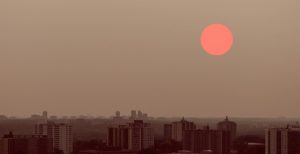 Hazy skies in Toronto caused by wildfire smoke.
In 2024, the west of Canada was hit by mega wildfires that devastated iconic places like Jasper and displaced thousands in British Columbia, Alberta, and Quebec. Communities across Ontario and Quebec were hit by major flooding, while still other communities were affected by hail storms and extreme heat. Summer 2024 is Canada’s most destructive season on record for insured losses due to severe weather events, according to the Insurance Bureau of Canada.
In the face of this climate crisis, Canada must act urgently to protect public health and the environment. Our three-step plan—Stop, Drop & Roll—can help lead the way!
STOP fossil fuel disinformation
To ensure a liveable planet, we must end the influence of fossil fuel lobbyists and business groups that undermine the democracy of our decision-making institutions. For decades, the oil and gas industry has invested billions in misleading advertising, deceiving the public by greenwashing to falsely portray fossil fuels as part of a clean, net-zero future.
Health professionals took on Big Tobacco to protect health – and won. It’s time to do the same with Big Oil. Bill C-372, An Act Respecting Fossil Fuel Advertising, introduced by NDP MP Charlie Angus in 2024, aims to stop misleading fossil fuel advertising, much like the successful restrictions on tobacco ads.
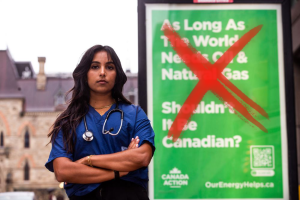
With support from over 750,000 health professionals across Canada, the Canadian Association of Physicians for the Environment has been championing a ban on fossil fuel ads. Bill C-372 presents a real opportunity to stop Big Oil’s deceptive tactics and protect people’s health.
DROP emissions with ambitious climate policy
To protect both health and the environment, Canada must reduce greenhouse gas emissions by 40 per cent by 2030 and achieve net zero by 2050, as pledged in the Paris Agreement. Currently, Canada has the second-highest CO2 emissions per capita in the G20, with the oil and gas sector accounting for over 30 per cent of the country’s total emissions—and rising. Canada has a duty, and an opportunity to lead in global climate action.
Key policies like the oil and gas emissions cap, new methane regulations, and clean electricity regulations are critical. However, with limited time before the next federal election, these policies are at risk of being weakened by industry pressure and delays. For Canada to meet its climate commitments, strong versions of these policies must be adopted now.
ROLL out solutions to save lives now
While reducing climate emissions is vital for long-term health, immediate actions can save lives as climate impacts worsen.
In 2023, Canada introduced its first National Adaptation Strategy, aimed at protecting communities and health in response to climate impacts. Key actions include:
- Developing wildfire plans for high-risk areas
- Preventing deaths from extreme heat
- Implementing heat adaptation measures
- Strengthening health systems to withstand climate impacts
However, more needs to be done to strengthen this strategy. Adequate funding—between $5.3 billion and $8.13 billion annually—is needed to protect communities from climate disasters, especially harmful wildfire smoke. Current federal investment falls short, risking the health and well-being of people in Canada.