By Robb Barnes, Climate Program Director
Looking around at COP29 in Baku, one can be forgiven for thinking that everything in international climate politics moves at great speed. There is so much happening – tens of thousands of busy people on the ground, thousands of events and meetings, hundreds of media stories and high-level policy announcements from nations all around the world.
There’s never a dull moment. The days go by in a blur.
Yet while the pace of action on the ground is frenetic, this masks something much more glacial: the pace of the negotiations. Obviously, operating by consensus is hard when there are nearly 200 nations involved. Given the scale of climate change and the existential challenges it represents – whether social, cultural and economic – negotiations cover everything from forest loss to historical culpability on emissions, gender, food, emerging technologies and much, much more.
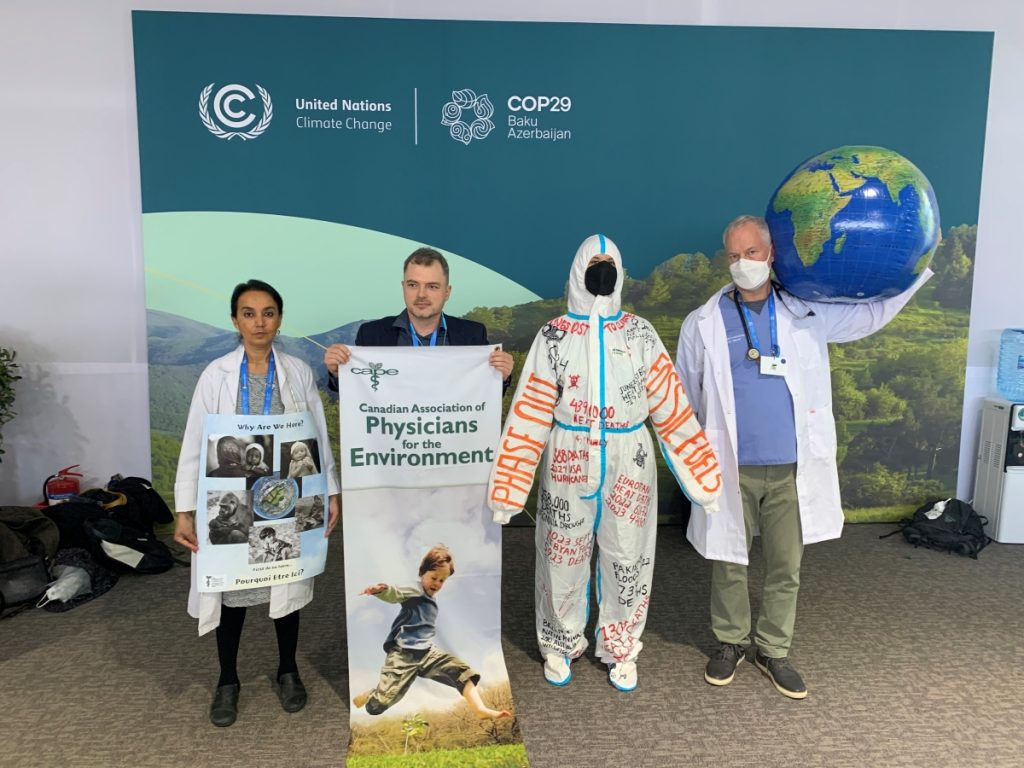
The negotiations in week one of COP29 in Baku have been particularly sluggish. At issue is climate finance – the money required to support action to slash climate pollution and adapt to the many changes already underway.
For developed countries like Canada, a key component of the COP process is determining the speed and scale of ambition on climate finance. Of course the ethical reasons for this are clear: developing countries have done the least to cause climate change, yet are hardest hit by its impacts and lack resources to deal with it. Rich countries have made huge financial profits from fossil-fuel-led industrial development that is driving climate change, but are now refusing to pay their fair share to manage its impacts.
Yet one only has to briefly consider the domestic political angle of this issue to understand why it is so challenging. With climate change already a politically challenging file for the current federal government, and with affordability on everyone’s mind at home, what is the political benefit of pledging money for technology adoption or disaster resilience in countries far from home?
It’s a hard story for any politician to tell. For this and other reasons, the developed world’s last major financial commitment of $100 billion a year for developing countries, decided back in Copenhagen in 2009, arrived two years late. At COP29, rich countries have been challenged with raising up to $1 trillion. Debates continue to swirl over the amount of funds that would be delivered in grants as opposed to loans, or in public money as opposed to private sector investments.
Whatever its communication challenges, climate finance remains a linchpin of the international climate regime. The Paris Agreement – a major international and legally binding agreement to which Canada was a key contributor and is a signatory – hinges on funds that boost the climate capacity of developing countries.
And there’s a realpolitik reason it matters for countries like Canada. The developing world is an increasingly large source of global climate pollution. Without funds to rapidly decarbonize, developing countries will pose a growing threat to the stability of the world’s climate. It’s in everyone’s interest to tackle these emissions before they grow. Time is of the essence.
Of course, none of this is helped by the insidious presence of fossil fuel lobbyists, whether in and around Canadian events or elsewhere throughout the conference. If the COP negotiations are a logjam, with trees getting mired in the river, the fossil fuel industry is draining the water and grounding the entire enterprise.
It’s time for Canada and other developed countries to step up to confront this challenge. Canada was an important and constructive voice in the establishment of the Paris Agreement in 2015. We can, and must, do the same with the climate finance negotiations at COP29.
Urgency is key. We must remember that climate change waits for no one. Year-over-year increases in global temperatures are behind a sharp rise in climate catastrophes, both at home and abroad. This means more health harms, more death, more destruction, and a steeper hill to climb for any country or community trying to address climate change in a just and proactive way.
As we move into the middle of the final week at COP29, the frenetic pace of action in the conference room halls must match the speed required for negotiations and solutions.