|
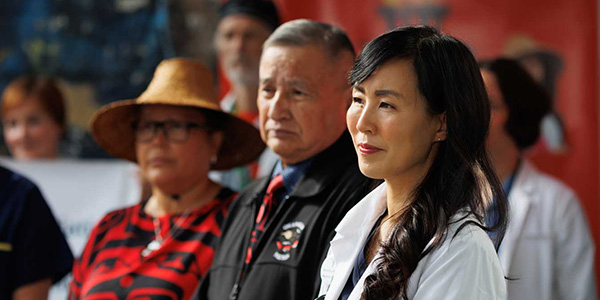
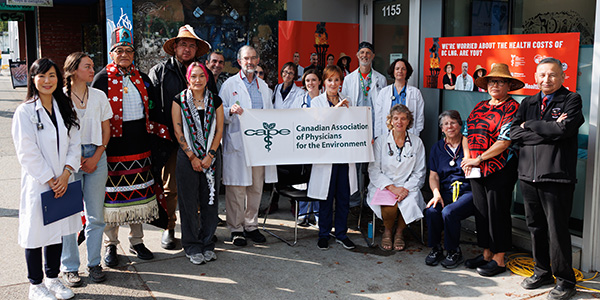
CAPE president Dr. Melissa Lem with First Nations leaders and CAPE BC physicians at their Protect Health from LNG press conference in September.
|
| Dear CAPE supporter,
As children in BC returned to school last month, my family walked—like so many others—under the grey pallor of smoke-filled skies. Vancouver’s air quality ranked among the worst in the world that week. Our back-to-school walk felt like a reflection of CAPE’s work in this moment—pressing forward through the haze, shoulder to shoulder with others striving for new beginnings, while decision-makers keep fanning the flames.
Across Canada, governments are retreating into the fossil-fuelled past, doubling down on policies that push us towards a hot, hazardous, and unhealthy future. Ottawa has given renewed license to the fossil fuel industry by weakening environmental protections and sidelining Indigenous rights through Bill C-5 and the Major Projects Office. Provinces have followed suit—greenlighting LNG projects, extending coal power, and letting oil and gas companies off the hook for billions in clean-up costs.
Through that smoke, we at CAPE keep striding forward—with integrity, compassion, and conviction. The updates below highlight how we are standing up to polluting industries and urging governments to change course. Another record-breaking summer of deadly heat and wildfires tested us. But our resolve shone last week as we united for Canada’s inaugural National Day of Action on Planetary Health, calling on leaders to protect our health by protecting our planet.
As my CAPE presidency ends next month, I have never been more proud or grateful to walk beside you. May this newsletter restore your energy to keep moving toward the healthier new beginning that current and future generations deserve.
With gratitude and determination,
Dr. Melissa Lem
CAPE Board President
|
CAMPAIGN UPDATES & CALLS TO ACTION
United in action for Planetary Health Day
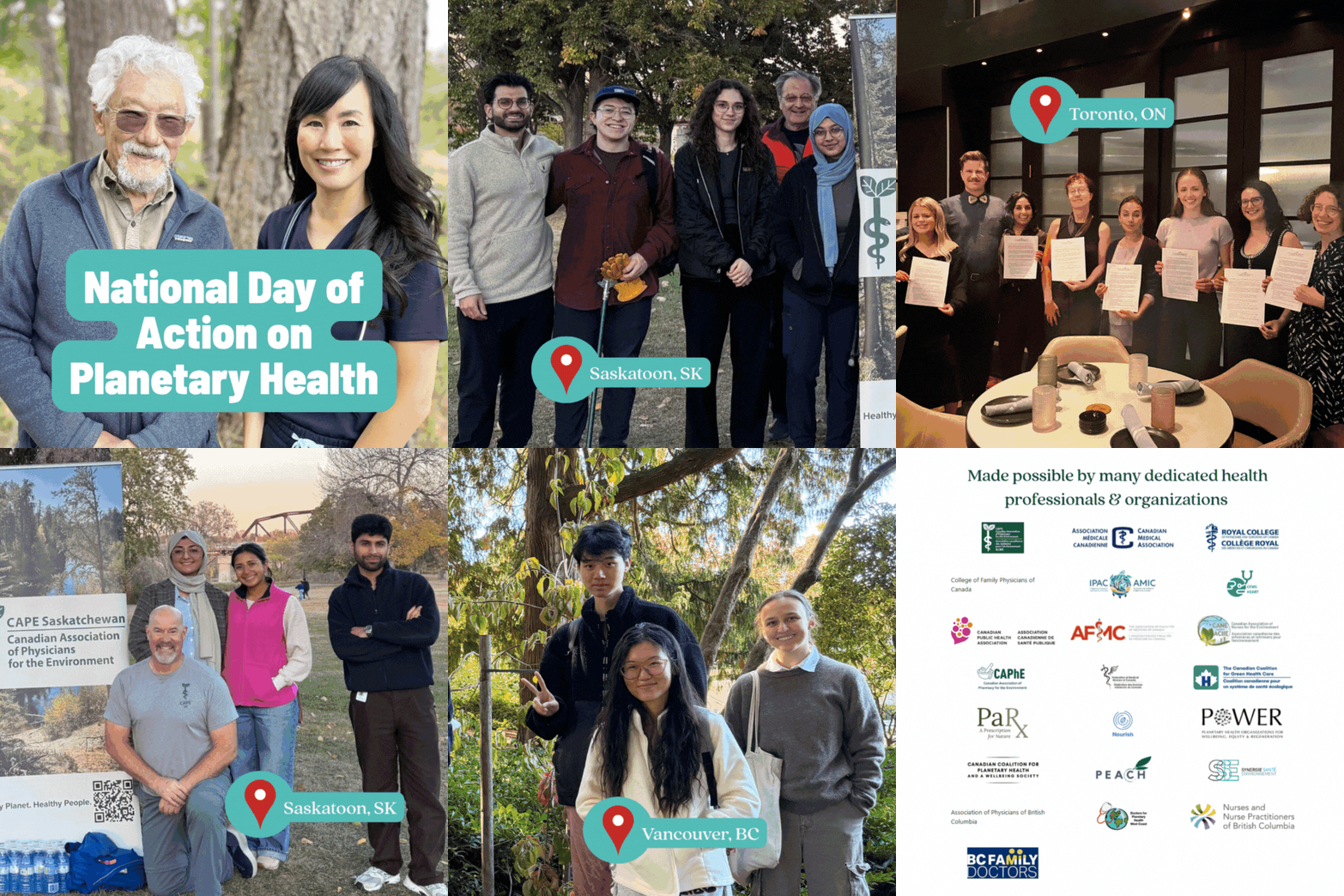
October 6 was a historic day for our movement. The first-ever National Day of Action on Planetary Health in Canada—and possibly the world—had participation from Canada’s top medical associations alongside grassroots health advocacy organizations, representing over 250,000 health professionals in total. It brought together people from across the healthcare community—doctors, paramedics, nurses, pharmacists, medical students, and health educators. And it mobilized the CAPE community, as physicians from every single regional committee took action.
“Health professionals taking action together create a special kind of power. It was so inspiring to see the healthcare community rally at scale for planetary health. I’m excited to see how this will grow!” said Dr. Melissa Lem.
Learn more:
|

|
|
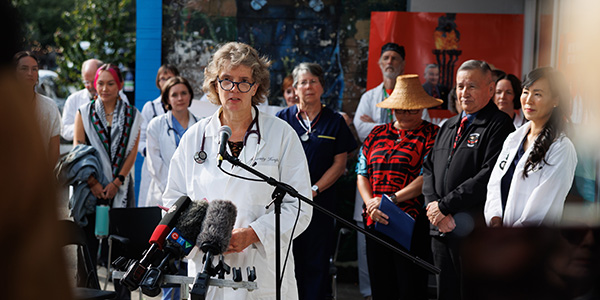
Dr. Ulrike Meyer describes how LNG and fracking have harmed people’s health in her community, during a CAPE BC press conference in Vancouver.
|
Protecting health from LNG
Two decades ago, Dr. Ulrike Meyer served a relatively healthy farming community in northeast BC. Now, surrounded by more than 330,000 fracking wells, she’s seen an alarming surge in rare cancers.
“Last weekend there was a fundraiser for a 14-year-old boy with stage four Hodgkin’s lymphoma,” said Dr. Meyer, a family physician in Dawson Creek. “A mother of a young girl who went through cancer treatment for a kidney tumour could rattle off three other children with leukemia and brain tumors.”
She became deeply concerned about fracking’s health impacts after a radiologist colleague diagnosed his 10th case of glioblastoma in their small town—an aggressive brain tumour he’d rarely seen in 30 years of practice in a big city. Last year, her colleague found lung cancer in 23 of the 25 biopsies he performed in just two months.
The health and climate impacts of the growing fracking and LNG industry disproportionately harm First Nations and rural communities. That injustice spurred CAPE BC to partner with Indigenous leaders and rural health care providers to launch the Protect Health from LNG campaign last month.
With transit ads across the province and an open letter, they’re challenging provincial leaders to prove LNG is safe for health, because health protectors’ frontline experience and growing medical evidence show it’s not. |
|
|
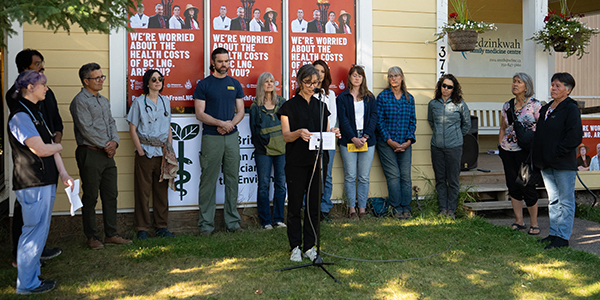
Dr. Sally Harvie spoke to reporters, surrounded by First Nations leaders and nurses from northern BC.
|
| “When governments promote LNG as a clean transition fuel, it is greenwashing,” said Dr. Sally Harvie at a press conference in Smithers. “LNG is a fossil fuel that worsens climate change, pollutes water and air, and directly harms human health.”
CAPE BC is asking provincial and federal leaders to conduct a comprehensive, independent health impact assessment before any more LNG projects are approved.
“The fact that this hasn’t been done—and it’s been allowed to get to where it is—is just mind-boggling,” Dr. Harvie said.
Soon after the campaign launch, Drs. Tim Takaro and Margaret McGregor published research revealing that LNG facilities flare three times more gas during start-up than regular operations—pollution that’s not accounted for in environmental assessments. That means regulators are vastly underestimating air pollution and health risks for nearby communities.
“LNG has taken centre stage in the Carney administration’s nation-building strategy,” Dr. Takaro said. “And yet we’re continuing to discover how poorly regulated this industry really is, particularly with respect to its risks to human health.” |
|
At the Vancouver press conference, CAPE BC physicians stood in solidarity with leaders from Canadian Association of Nurses for the Environment and First Nations.
|
|
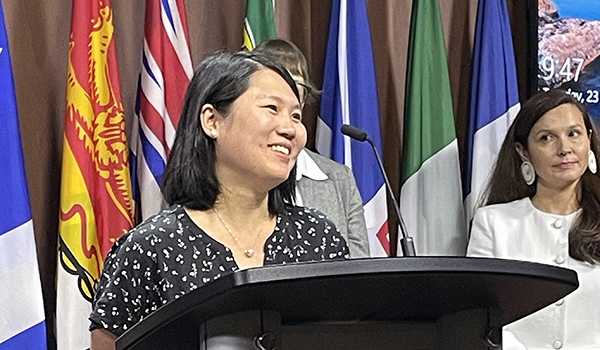
Dr. Helen Hsu advocated on Parliament Hill for a clean electricity grid, in partnership with Sacred Earth, Climate Caucus, David Suzuki Foundation, and the International Brotherhood of Electrical Workers.
|
Elbows up for clean power
We’re urging the federal government to build an east-west electricity grid powered by renewables, while upholding Indigenous and workers’ rights. We recently pushed this message in meetings with two dozen MPs, alongside a wide-ranging coalition of labour unions, Indigenous leaders, faith groups, climate activists, electrical workers, and municipal councillors from across Canada.
“The health of the environment is the health of the people. We cannot thrive in isolation. Climate change and extreme weather harm physical and mental health. A national east-west renewable energy grid would reduce air pollution, improving Canadians’ health in the short term, and cut carbon emissions, protecting long-term health,” said Dr. Helen Hsu. |
|
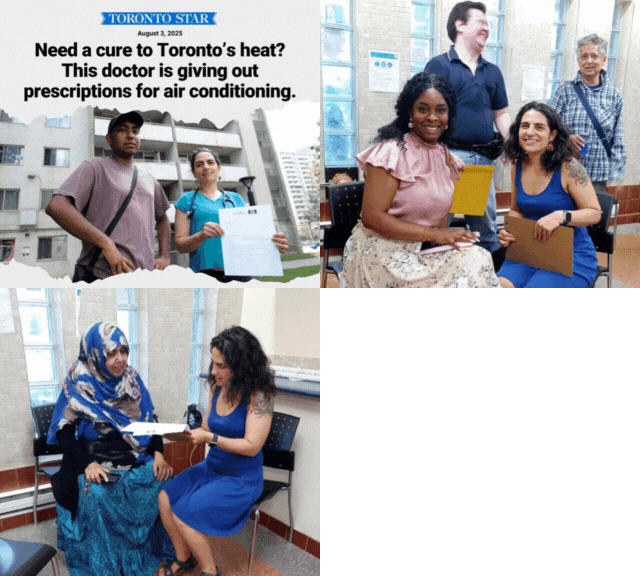
Dr. Samantha Green prescribed cooling solutions for vulnerable people at pop-up air conditioner clinics in Toronto, in partnership with Community Resilience to Extreme Weather (CREW) and Health Providers Against Poverty.
|
Responding to extreme heat & wildfires
Climate change left no province or territory untouched during Canada’s second-worst wildfire season on record. Manitoba, Quebec, New Brunswick, Newfoundland and Labrador in particular grappled with record-shattering heat, poor air quality, and wildfires. To protect our most vulnerable community members, we launched a campaign asking governments to enact maximum indoor temperature laws and expand cooling programs. |
CAPE PHYSICIANS IN ACTION
|
|
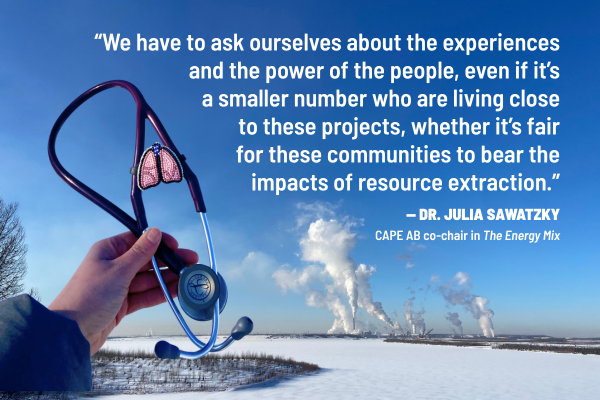
Dr. Sawatzky’s stethoscope with beadwork by Métis doctor and artist, Jamie Thompson, of Birch and Beads, overlooking the oil sands near Fort McMurray / Quote from The Energy Mix’s story about gas-powered AI data centres in Alberta
|
Fossil fuel fights
- In Alberta we joined a coalition challenging the province’s plan to let oil and gas companies off the hook for abandoned well clean-up, while everyday Canadians pay the price—with their tax dollars and their health.
Watch a town hall recording | Learn more
- Saskatchewan co-chair and medical student Sabahat Saeed spoke out against her province’s decision to extend coal power beyond the federally mandated 2030 phase-out during a Citizens for Public Justice webinar.
- In Ontario and New Brunswick, we continue to fight against new gas plant proposals and gas plant expansions.
- AQME condemned Quebec’s hasty adoption of a big energy bill and called on the government to finally regulate gas consumption in buildings, as promised at the last COP in Baku.
Suggested reading:
- Drs. Courtney Howard and Tim Takaro contributed to a CMAJ report, Research as reconciliation: oil sands and health, which powerfully amplifies calls from Indigenous communities and researchers for further investigation into the health impacts of oil sands and tailings ponds in Alberta.
|
|
|
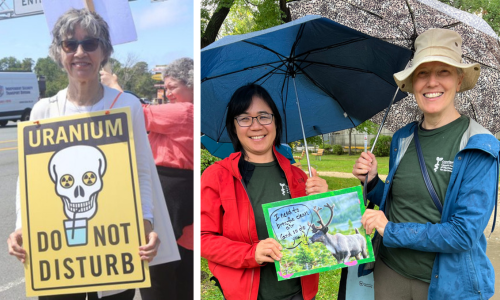
Dr. Catherine Cervin protesting uranium mining and exploration outside the Nova Scotia Environment Minister’s office (Photo by Madiha Mughees, Halifax Examiner) and Drs. Ming-Ka and Ann Loewen at Manitoba’s Draw The Line rally (Photo by Wei-An Lau)
|
Tackling toxics
- In Nova Scotia, we raised the alarm about proposed uranium exploration and mining. Dr. Catherine Cervin joined a coalition at the legislature to present a petition with more than 7,000 signatures calling for reinstatement of a moratorium on uranium mining and exploration.
- We called out Ontario’s new watered-down Blue Box rules, warning that plastics harm health at every stage of their lifecycle, from extraction to disposal. Less than 50% of non-alcoholic beverage containers are collected and sorted for recycling in Ontario, which like Manitoba lacks an effective and comprehensive deposit-return program.
- In New Brunswick, we submitted recommendations to modernize and strengthen the province’s Clean Air Act.
- Alberta physicians spoke out about the health threats of microplastics at a Calgary screening of Plastic People.
|
|
“Urban planning, the way our cities are designed, the way we get around, the way we live—all of these things have an impact on our health. Sometimes we think, ‘It costs too much money,’ but when you consider all the health benefits—commuting to work by bike or on foot—it cuts the risk of cancer and heart disease in half.”
|
- AQME is keeping climate action and adaptation in the election season spotlight in Quebec, as municipal elections take place this fall and provincial elections are being prepared for next fall. AQME published recommendations for municipal climate plans to be completed by March 2027, positioning health as a crucial local issue that municipal administrations have the power to improve. AQME also co-signed an op-ed in La Presse highlighting new Léger poll results: 81% of Quebecers want action to combat and adapt to climate change.
- We advocated for active transportation and bike lanes, riding alongside families in Winnipeg’s Kidical Mass in Manitoba and pushing back against Nova Scotia’s efforts to block new cycling infrastructure. “The government wants to reduce health care costs. The government wants to improve economic productivity… A bike lane network and better transit will do that… Cycling is a win-win-win,” Dr. Catherine Cervin told the Halifax Examiner.
- CAPE Newfoundland & Labrador physicians Samantha Pomroy and Stephanie Atkinson, and senior health researcher Pablo Navarro, joined CBC’s The Signal to share their expertise on how wildfire smoke harms health and how we can take action to protect our communities.
- CAPE MB chair Dr. Ann Loewen and CAPE Development Manager Karina Cardona joined Climate Action Team Manitoba’s call for a provincial climate plan to protect what’s precious:
|
Want to get involved in your province’s committee?
Contact your regional coordinator!
|
|
CAPE NB regional chair Dr. Renée Turcotte and Dr. Chris Arsenault at the Social Forum in Fredericton. (Photo by Tynette Deveaux)
|
CAPE TAKES
‘Climate change has infiltrated my medical practice. I have no choice but to respond’
“The science is crystal clear: Environment Canada’s increasingly frequent warnings are a direct result of our collective failure to take meaningful climate action, of our continued dependence on fossil fuels, and of premiers who still support the building of pipelines. In the face of all this, we must break the silence. Every level of government must connect the dots between climate and health in public statements and in policy. We need political recognition that meets the scale of the crisis, just as the International Court of Justice recently affirmed.”
— Dr. Claudel Pétrin-Desrosiers, AQME president and family physician, in her op-ed for the Montreal Gazette
Read the full op-ed
|
|
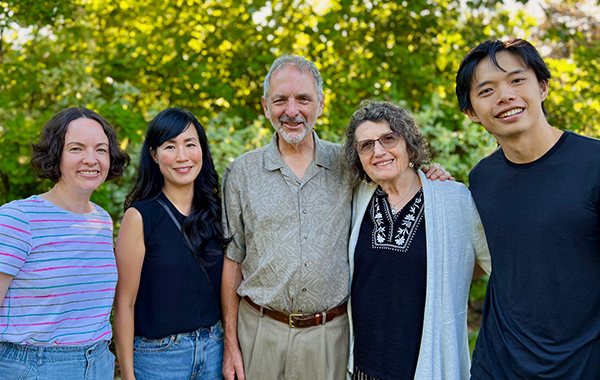
Drs. Deborah Curry, Melissa Lem, Larry Barzelai, Marianne Rev, and new regional co-chair Kevin Liang
|
Dr. Larry Barzelai is retiring
After a remarkable decade as chair of CAPE BC, Dr. Larry Barzelai is retiring from his role. A steady leader since 2016, Larry built the strong foundation of CAPE’s first regional committee, empowering other health professionals across Canada to follow suit. Admired for his welcoming and collaborative spirit, Larry supported the advocacy ideas of countless physicians and brought ambitious projects like CAPE’s Planetary Health Conference to life. From paddling the Peace River in protest of the Site C Dam to mentoring new volunteers, Larry’s legacy is one of trust, inspiration, and unwavering commitment to a healthy planet and healthy people. One colleague praised his quiet leadership style for reflecting this Taoist wisdom:
With the greatest leader above them, people barely know one exists… He never speaks carelessly. He works without self-interest and leaves no trace. When all is finished, the people say, ‘We did it ourselves.’
|
|
|
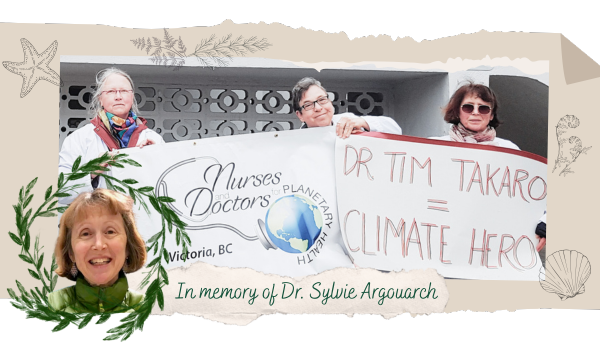
Drs. Jan Ray, Lucy Nerenberg, and Sylvie Argouarch protesting the TMX pipeline in Victoria.
|
Remembering Dr. Sylvie Argouarch
We join CAPE BC in mourning the tragic death of Dr. Sylvie Argouarch, a devoted geriatric psychiatrist and passionate advocate for human and planetary health in Victoria. Sylvie brought warmth, empathy, vitality, and a love of nature to everything she did—cycling in all weather to care for patients; swimming in the ocean she fell in love with as a child in France; and camping and hiking on Vancouver Island with her family and friends.
Her CAPE colleagues will miss her steadfast presence at rallies and marches. “You need more than one person to hold up a banner,” one recalled. “I could always count on Sylvie to be my other pair of hands.”
Read more about Sylvie
|
OPPORTUNITIES FOR LEARNING & ACTION
|
|
|
Planetary Health Emergency: The Health Benefits of Climate Action
October 25 Virtual Conference
11:10am – 7:05pm ET | 8:10am – 4:05pm PT
Prices vary
Register
|
|
|
Learn from experts leading local initiatives, connect with peers, and discover practical ideas for action. Open to all health professionals who want to support a healthier, more sustainable future for all. Fully accredited to provide CPD credits for physicians.
⚕️ Attending the Family Medicine Forum?
Join us for the CAPE Social on Thursday, Nov 6, 6–8pm CT or lend a hand at our booth in Winnipeg. |
From our partners and allies:
- ⛽ The Global Climate & Health Alliance released a landmark report, Cradle to Grave, that comprehensively details the wide-ranging health toll of fossil fuels. CAPE Drs. Courtney Howard, Tim Takaro, and Joe Vipond contributed.
Read the report | Watch the media briefing
- The EAT–Lancet Commission’s new report underscores how transforming global food systems would protect health, advance social justice, and restore planetary stability amid rising food insecurity, conflict, and climate disruption
Read the report
- Oct 30: UT Climate, Health & Sustainable Care 2025 Annual Symposium
Register
- Dec 9: Climate Action Against Disinformation: Climate Disinformation, and What We Can Do About It (webinar)
Register
- ️ Until Dec 12: Advance environmental equity by engaging in Environment and Climate Change Canada’s strategy consultation
Join the discussion
- Starting Jan 16, 2026: Taking Action on Planetary Health Certificate
Apply
|
|
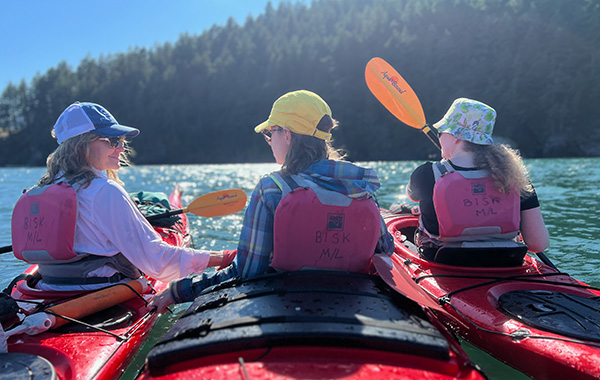
CAPE staff took a break from their annual retreat to go kayaking and watch seals around Bowen Island. Nola Poirier (Manager, Health & Economic Policy Program), Rhiannon Fox (Regional Coordinator – Western Canada), and Reykia Fick (Communications Director) hung onto each other’s boats to ride out some motorboat waves and rest together. (Photo by Megan Wilde)
|
Catch a CAPEr?
Please send us images of you and fellow CAPErs in nature! We want to share how our community is enjoying the preciousness of life that we’re fighting to protect.
Send us a CAPEr in the Wild
|
| PS: Thanks for reading this far! A lot has happened since our last newsletter, so we promise future editions will be more concise. Until then, we welcome feedback on our relaunched newsletter—email us |
Your support makes it possible for us to protect the health of people and the planet. All donations to the Canadian Association of Physicians for the Environment (CAPE) are eligible for a tax receipt.
Make a donation
|
|
|
|