Tell the Prime Minister: Protect Canada’s anti-greenwashing rules

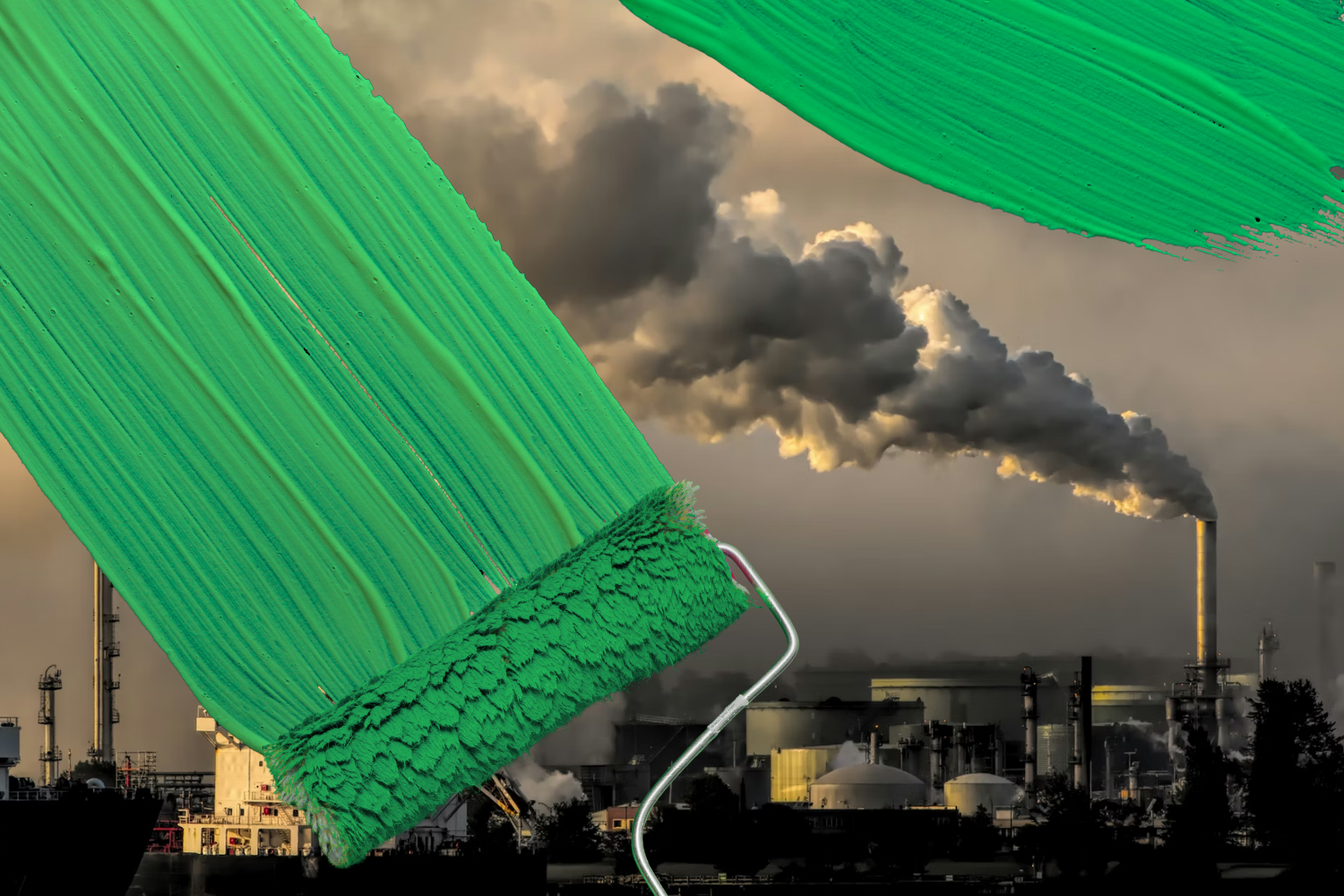
Gloomy landscape photo of an industrial operation with a smokestack emitting a large volume of pollution, and a graphic of green paint being rolled over the image with a paint roller

Canada finally has rules that require companies to prove their environmental claims. For years CAPE and our allies pushed for these rules to shield people from misleading ads that delay climate action and endanger our health. Passed in June 2024, the legislation is working as intended by curtailing false, misleading and exaggerated green claims. All along, the oil and gas industry has fought these changes; they would rather change the law than clean up their act.

Now the federal government has moved to roll back these hard-won protections through its budget and memorandum of understanding (MOU) with Alberta. We can’t let Ottawa sacrifice the health of people in Canada to serve the interests of big polluters.

Send a message to Ottawa: Don’t give fossil fuel companies the license to lie

Email the Prime Minister, the Minister of Finance and National Revenue, the Minister of Industry, and your Member of Parliament to protect the health of people in Canada by preserving our anti-greenwashing laws. Every message sent increases pressure on decision-makers to choose truth, health, and transparency over fossil fuel industry spin. Here are two ways to send the email message (please choose one option):

Option A: ‘One-click’ fill and send

For the greatest convenience, submit your contact details below to send the email instantly to the Prime Minister, ministers and your Member of Parliament. You’ll receive a confirmation email with a copy of your sent message. *If you are unable to submit the form, please refer to Option B to send your message manually.


Option B: Manually send an email

For the maximum impact, we recommend sending the message directly from your personal email account. This allows you to customize the message and add additional decision-makers to strengthen your voice.

  1. Add the Prime Minister, the Minister of Finance and National Revenue, the Minister of Industry as email recipients:
    mark.carney@parl.gc.ca, francois-philippe.champagne@parl.gc.ca, melanie.joly@parl.gc.ca
  2. (Optional) Add your MP to the email recipients: find your MP by going to https://www.ourcommons.ca/members/en and entering your postal code. Go to the MP’s profile and find their email in the contact details.
  3. Copy and paste the following email content:
    View email text

    Subject line: Please protect Canadians from greenwashing. Don’t weaken the Competition Act.

    Dear Prime Minister Mark Carney, Minister of Finance and National Revenue François-Philippe Champagne, Minister of Industry Mélanie Joly:

    I am writing to urge you to protect people’s health, safety, and trust by preserving Canada’s anti-greenwashing rules.

    Right now, the Budget 2025 Implementation Act proposes changes that would make it harder for the public to hold companies accountable for misleading environmental claims. Proposed changes to sections 597(2) and 598 would remove citizens’ ability to bring concerns about unsubstantiated business-level green claims to the Competition Tribunal.

    The Competition Bureau has expressly recognized that private access “complements” its enforcement work in explicit recognition of the bureau’s resource limitations. This rollback would allow the biggest polluters even more freedom to mislead. At a time when climate disinformation is spreading rapidly and fossil fuel companies are marketing heavily to the public, strong protections matter more than ever.

    When companies misrepresent the health and environmental impacts of their products, they obscure risks that directly harm people: worsening air pollution, extreme heat, wildfire smoke, heart and lung disease, and more. People in Canada need truthful, evidence-based information to protect their families and communities.

    Removing truth in advertising laws amounts to rigging the market to favour big polluters over genuinely green industries, undermining innovation and the energy transition.

    I am asking you to:

    1. Remove BIA ss. 597(2) and 598 and preserve Canadians’ ability to challenge unsubstantiated environmental claims at the Competition Tribunal.

    2. Strengthen and clarify, rather than weaken, the requirement that companies substantiate environmental claims with transparent, verifiable evidence.

    3. Support the Competition Bureau with the resources and regulatory clarity needed to tackle greenwashing effectively.

    4. A recent global review found that nearly 40% of green claims online are misleading, and 72% of North American executives admit to greenwashing. People in Canada overwhelmingly support strong protections — 93% believe companies should face penalties for environmental claims they cannot prove. We need laws that reflect this public concern and defend the integrity of our information environment.

      Prime Minister, this is a critical moment. Weakening these protections would undermine consumer trust, disadvantage genuinely sustainable businesses, and put people’s health at risk. It gives the impression that corporate interests are more important to you than the public interest. Disinformation poses a grave and growing threat to human and planetary health. That’s why only weeks ago at COP30, our country signed on to the Global Initiative for Information Integrity on Climate Change. Please honour that commitment we made abroad here at home.

      Please stand with people in Canada — not polluters — and ensure our anti-greenwashing laws remain strong, transparent, and enforceable.

      Thank you for your attention to this important issue.

  4. Add your name/signature and contact details to the bottom of email

Greenwashing makes us sick

When our government rewrites truth-in-advertising rules at the fossil fuel industry’s behest, it not only impairs consumer choice and dupes investors; it also rigs the market to favour big polluters over genuinely green industries.

Greenwashing slows climate action, weakens public health protections, and allows polluting industries to stay in business despite science, safety, and justice. When companies disguise polluting products as “clean,” communities breathe more smoke, face more heat, and suffer more illness. Genuine companies who are walking the talk can’t compete, slowing green innovation and the energy transition.

The budget and MOU promise to weaken anti-greenwashing laws

The Budget Implementation Act proposes to lower the evidence standard that businesses need to meet for their green claims and eliminate the public’s ability to challenge unsubstantiated environmental claims at the Competition Tribunal, making it more difficult for the public to hold businesses to account. If passed, polluters will face fewer consequences for misleading claims, while people and communities will be left unprotected.

According to evidence compiled by legal and environmental experts:

  • Greenwashing is widespread: 40% of online green claims worldwide are potentially misleading, and 72% of North American executives admit their companies are guilty of greenwashing.
  • Greenwashing harms health, impairs consumer choice, undermines truly green businesses, and slows climate action.
  • People in Canada overwhelmingly support strong rules: 93% believe companies should face penalties for environmental claims they cannot prove.
  • Without public access to the Tribunal, we  will be forced to rely solely on Competition Bureau investigations — a process that is slow, opaque, and often inconclusive.

This rollback gives the biggest polluters a quieter path to mislead the public at a time when climate disinformation is becoming a greater threat to human and planetary health.

Why health professionals are speaking out

CAPE physicians see the consequences of climate misinformation every day. When fossil fuel companies greenwash their products, they obscure the real risks: worsening asthma, heart disease, wildfire smoke exposure, extreme heat, and displacement from floods and storms.

If people in Canada can’t trust the information shaping our energy choices, our ability to protect public health collapses. Truth in advertising isn’t just about fairness—it’s about safety.

What we’re asking the Prime Minister to do

At a time when disinformation is an escalating threat to our health, climate and sovereignty, Canada should be raising the bar for truth and accountability, not lowering it. Only a few weeks ago at COP30, Canada signed the Global Initiative for Information Integrity on Climate Change, a UNESCO‑backed pledge to combat climate disinformation and protect the public’s right to science‑based information. We should be strengthening anti-greenwashing rules, not dismantling them.

Join us in urging the federal government to:

  • Keep Canada’s anti-greenwashing rules strong.
    Preserve private right of action, which gives the public the ability to challenge unsubstantiated business-level environmental claims.
  • Strengthen requirements for companies to back up their environmental claims with verifiable, transparent evidence.
  • Support the Competition Bureau with resources and clear regulations to tackle greenwashing and protect consumers.

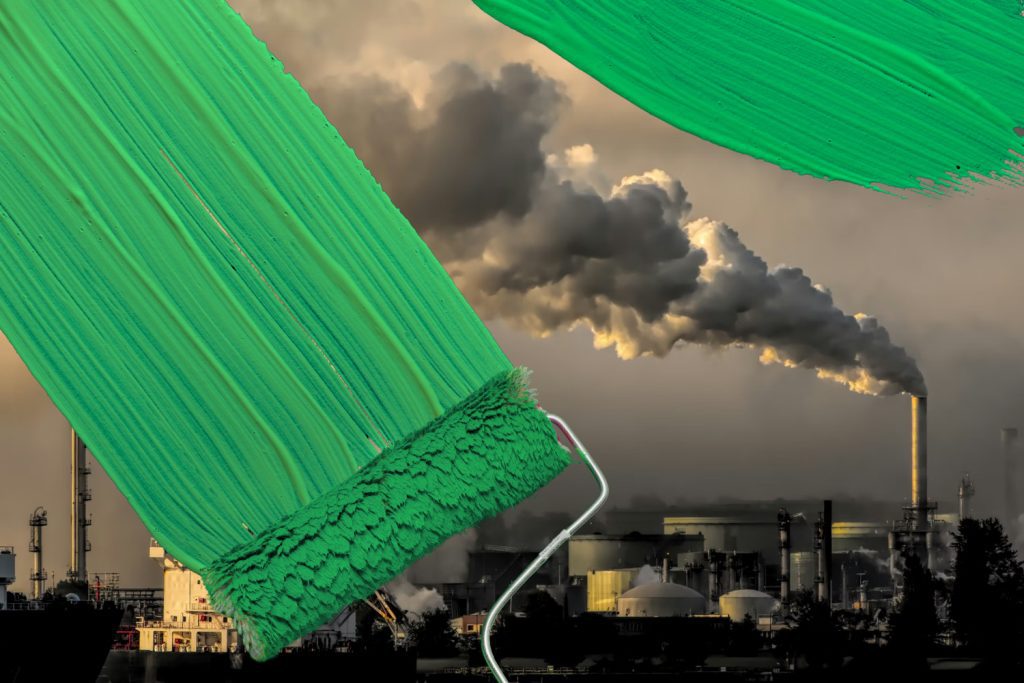
Gloomy landscape photo of an industrial operation with a smokestack emitting a large volume of pollution, and a graphic of green paint being rolled over the image with a paint roller

Canada finally has rules that require companies to prove their environmental claims. For years CAPE and our allies pushed for these rules to shield people from misleading ads that delay climate action and endanger our health. Passed in June 2024, the legislation is working as intended by curtailing false, misleading and exaggerated green claims. All along, the oil and gas industry has fought these changes; they would rather change the law than clean up their act.

Now the federal government has moved to roll back these hard-won protections through its budget and memorandum of understanding (MOU) with Alberta. We can’t let Ottawa sacrifice the health of people in Canada to serve the interests of big polluters.

Send a message to Ottawa: Don’t give fossil fuel companies the license to lie

Email the Prime Minister, the Minister of Finance and National Revenue, the Minister of Industry, and your Member of Parliament to protect the health of people in Canada by preserving our anti-greenwashing laws. Every message sent increases pressure on decision-makers to choose truth, health, and transparency over fossil fuel industry spin. Here are two ways to send the email message (please choose one option):

Option A: ‘One-click’ fill and send

For the greatest convenience, submit your contact details below to send the email instantly to the Prime Minister, ministers and your Member of Parliament. You’ll receive a confirmation email with a copy of your sent message. *If you are unable to submit the form, please refer to Option B to send your message manually.


Option B: Manually send an email

For the maximum impact, we recommend sending the message directly from your personal email account. This allows you to customize the message and add additional decision-makers to strengthen your voice.

  1. Add the Prime Minister, the Minister of Finance and National Revenue, the Minister of Industry as email recipients:
    mark.carney@parl.gc.ca, francois-philippe.champagne@parl.gc.ca, melanie.joly@parl.gc.ca
  2. (Optional) Add your MP to the email recipients: find your MP by going to https://www.ourcommons.ca/members/en and entering your postal code. Go to the MP’s profile and find their email in the contact details.
  3. Copy and paste the following email content:
    View email text

    Subject line: Please protect Canadians from greenwashing. Don’t weaken the Competition Act.

    Dear Prime Minister Mark Carney, Minister of Finance and National Revenue François-Philippe Champagne, Minister of Industry Mélanie Joly:

    I am writing to urge you to protect people’s health, safety, and trust by preserving Canada’s anti-greenwashing rules.

    Right now, the Budget 2025 Implementation Act proposes changes that would make it harder for the public to hold companies accountable for misleading environmental claims. Proposed changes to sections 597(2) and 598 would remove citizens’ ability to bring concerns about unsubstantiated business-level green claims to the Competition Tribunal.

    The Competition Bureau has expressly recognized that private access “complements” its enforcement work in explicit recognition of the bureau’s resource limitations. This rollback would allow the biggest polluters even more freedom to mislead. At a time when climate disinformation is spreading rapidly and fossil fuel companies are marketing heavily to the public, strong protections matter more than ever.

    When companies misrepresent the health and environmental impacts of their products, they obscure risks that directly harm people: worsening air pollution, extreme heat, wildfire smoke, heart and lung disease, and more. People in Canada need truthful, evidence-based information to protect their families and communities.

    Removing truth in advertising laws amounts to rigging the market to favour big polluters over genuinely green industries, undermining innovation and the energy transition.

    I am asking you to:

    1. Remove BIA ss. 597(2) and 598 and preserve Canadians’ ability to challenge unsubstantiated environmental claims at the Competition Tribunal.

    2. Strengthen and clarify, rather than weaken, the requirement that companies substantiate environmental claims with transparent, verifiable evidence.

    3. Support the Competition Bureau with the resources and regulatory clarity needed to tackle greenwashing effectively.

    4. A recent global review found that nearly 40% of green claims online are misleading, and 72% of North American executives admit to greenwashing. People in Canada overwhelmingly support strong protections — 93% believe companies should face penalties for environmental claims they cannot prove. We need laws that reflect this public concern and defend the integrity of our information environment.

      Prime Minister, this is a critical moment. Weakening these protections would undermine consumer trust, disadvantage genuinely sustainable businesses, and put people’s health at risk. It gives the impression that corporate interests are more important to you than the public interest. Disinformation poses a grave and growing threat to human and planetary health. That’s why only weeks ago at COP30, our country signed on to the Global Initiative for Information Integrity on Climate Change. Please honour that commitment we made abroad here at home.

      Please stand with people in Canada — not polluters — and ensure our anti-greenwashing laws remain strong, transparent, and enforceable.

      Thank you for your attention to this important issue.

  4. Add your name/signature and contact details to the bottom of email

Greenwashing makes us sick

When our government rewrites truth-in-advertising rules at the fossil fuel industry’s behest, it not only impairs consumer choice and dupes investors; it also rigs the market to favour big polluters over genuinely green industries.

Greenwashing slows climate action, weakens public health protections, and allows polluting industries to stay in business despite science, safety, and justice. When companies disguise polluting products as “clean,” communities breathe more smoke, face more heat, and suffer more illness. Genuine companies who are walking the talk can’t compete, slowing green innovation and the energy transition.

The budget and MOU promise to weaken anti-greenwashing laws

The Budget Implementation Act proposes to lower the evidence standard that businesses need to meet for their green claims and eliminate the public’s ability to challenge unsubstantiated environmental claims at the Competition Tribunal, making it more difficult for the public to hold businesses to account. If passed, polluters will face fewer consequences for misleading claims, while people and communities will be left unprotected.

According to evidence compiled by legal and environmental experts:

  • Greenwashing is widespread: 40% of online green claims worldwide are potentially misleading, and 72% of North American executives admit their companies are guilty of greenwashing.
  • Greenwashing harms health, impairs consumer choice, undermines truly green businesses, and slows climate action.
  • People in Canada overwhelmingly support strong rules: 93% believe companies should face penalties for environmental claims they cannot prove.
  • Without public access to the Tribunal, we  will be forced to rely solely on Competition Bureau investigations — a process that is slow, opaque, and often inconclusive.

This rollback gives the biggest polluters a quieter path to mislead the public at a time when climate disinformation is becoming a greater threat to human and planetary health.

Why health professionals are speaking out

CAPE physicians see the consequences of climate misinformation every day. When fossil fuel companies greenwash their products, they obscure the real risks: worsening asthma, heart disease, wildfire smoke exposure, extreme heat, and displacement from floods and storms.

If people in Canada can’t trust the information shaping our energy choices, our ability to protect public health collapses. Truth in advertising isn’t just about fairness—it’s about safety.

What we’re asking the Prime Minister to do

At a time when disinformation is an escalating threat to our health, climate and sovereignty, Canada should be raising the bar for truth and accountability, not lowering it. Only a few weeks ago at COP30, Canada signed the Global Initiative for Information Integrity on Climate Change, a UNESCO‑backed pledge to combat climate disinformation and protect the public’s right to science‑based information. We should be strengthening anti-greenwashing rules, not dismantling them.

Join us in urging the federal government to:

  • Keep Canada’s anti-greenwashing rules strong.
    Preserve private right of action, which gives the public the ability to challenge unsubstantiated business-level environmental claims.
  • Strengthen requirements for companies to back up their environmental claims with verifiable, transparent evidence.
  • Support the Competition Bureau with resources and clear regulations to tackle greenwashing and protect consumers.