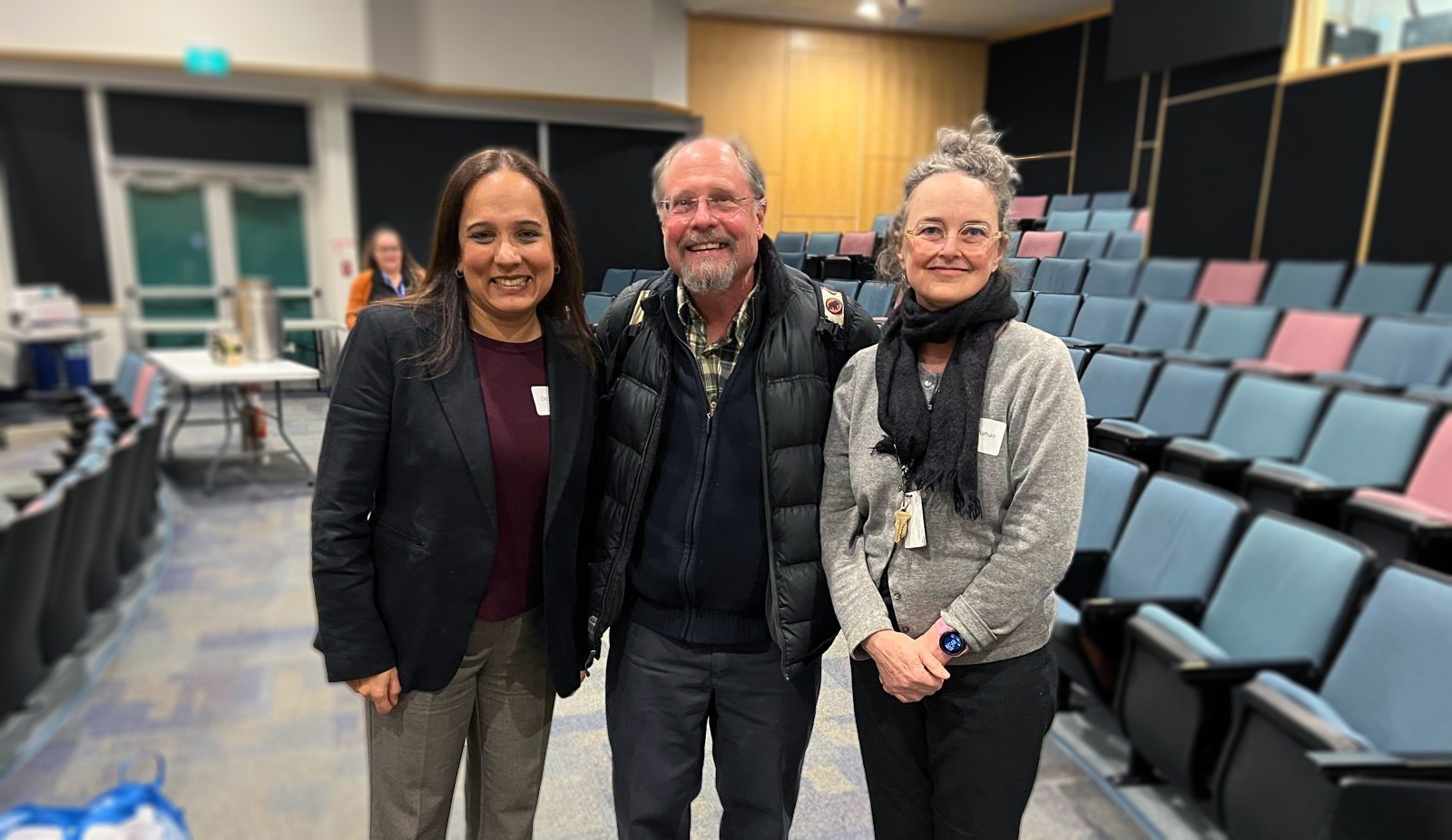
 CAPE physicians at a screening of Plastic People, a documentary about the presence of microplastics in our daily lives and their corresponding health impacts.
CAPE messages that shaped 2024 towards the creation of a healthier, more just 2025
By Jane McArthur, Toxics Program Director
“All powers have two sides, the power to create and the power to destroy. We must recognize them both, but invest our gifts on the side of creation.”
— Dr. Robin Wall Kimmerer, Potawatomi botanist, professor of environmental and forest biology
Through its Preventing Toxic Exposures Program, CAPE collaborates with healthcare professionals, communities, and policymakers to raise awareness and implement strategies aimed at reducing harmful environmental risks. This initiative encompasses various campaigns and projects that focus on identifying and mitigating the sources of toxic substances, namely forever chemicals or PFAS, thereby promoting a healthier and more sustainable environment for all.
An Update by the Program Director
The start of 2025 has brought with it a significant degree of activity that is leading many of us to contemplate the political landscape, the state of humanity and our own roles within the planet’s interconnected ecosystems—environmental, social, political, economic and more. I am among those who are concerned about recent changes made by governments outside of Canada, as well as the uncertainty we’re facing in Canada during this time of federal parliamentary prorogation (termination of the current session of Parliament on the advice of the Prime Minister) with an election on the horizon.
In our shared journey of working to better human health by protecting the planet, there have been setbacks that required us to reflect and re-energize. These moments challenged us to clarify our intentions and strategize how to best advocate for effective change to secure a safe and just future. This may be one of those moments…
Our advocacy efforts and strategies are shifting in response to the evolving political landscape. I remain optimistic even with clear and difficult setbacks. “How?” you might ask. While there is undoubtedly much to be concerned about, it also remains true that there is a lot of good work being done by good people with good effect!
The history of social change shows us the ebbs and flows of our collective experience—the progress made and the subsequent backsliding. It reminds us that even when we see things moving backwards, we have the power to move the trajectory forward yet again. Alongside regressive actions, progressive efforts persist and remain possible. I see the CAPE community continuing to invest our strengths and commitment in building a healthier, more just future.
CAPE’s Preventing Toxic Exposures Program is home to a number of critical campaigns where physicians, allied communities and professionals have been dedicating their energy and making a real difference. Now, perhaps more than ever, decision-makers at all levels need to prioritize health and justice through strong environmental policy. Industry and private sector interests cannot be allowed to set the agenda nor continue to pollute people and the planet unabated. For the health of the planet and all of us on it whose right to a healthy environment ought to be upheld, our advocacy is a powerful force!
What we've been up to in 2024
In 2024, CAPE physicians engaged through the Preventing Toxics Exposure Program. Ablog post articulated the areas where we aim to further mobilize the CAPE voice in service of toxics prevention in 2025!
On the Canadian Environmental Protection Act (CEPA), we continue to advocate for the listing of PFAS “forever chemicals” as toxic substances under CEPA.
At the invitation of Environment and Climate Change Canada (ECCC), CAPE’s Dr. Lyndia Dernis delivered a statement during an in-person event for the March 5 announcement by then-Minister of Environment Steven Guilbeault. The final State of PFAS Report signalled forward movement on the listing, risk management plans and NPRI reporting of PFAS.
CAPE and the Coalition for Action on Toxics (CAT) issued a press release and are currently preparing a submission with comments on the proposed PFAS listing order and risk management approach.
We’ve also developed a PFAS alert for physicians, which is now publicly accessible.
As we renew our commitments to this work, let us recognize the value of what we’ve already accomplished, and vow to keep pressing forward even in the face of adversity.

Jane McArthur
Toxics Program Director
Protecting Ourselves from Forever Chemicals Is Now a Legal Right
Today, protecting ourselves from toxic “forever chemicals” like PFAS isn’t just a moral imperative—it’s a legal right. Thanks to a landmark ruling by the International Court of Justice and long-overdue updates to the Canadian Environmental Protection Act (CEPA), people in Canada now have a formal legal right to a healthy environment. It’s a historic step forward.
Alongside a broad coalition of health, environmental, and justice organizations, CAPE is calling on Minister of Environment and Climate Change Julie Dabrusin to fully implement the 2023 CEPA amendments—which, for the first time in Canadian law, recognize this fundamental right.
PFAS and the Right to a Healthy Environment: How the Fight Takes Shape
A right is only meaningful if it leads to action. That’s where PFAS (a class of toxic) persistent chemicals come in.
PFAS are found in everything from drinking water and household products to human bloodstreams. They’ve been linked to cancer, hormone disruption, reproductive issues, and immune system damage. Despite these well-documented risks, PFAS are still widely used and under-regulated in Canada.
If Canada is serious about honouring the right to a healthy environment, it must start by protecting people from known toxic threats and PFAS are a clear place to begin. Implementing this right means:
- Phasing out harmful substances that contaminate our air, water, soil, and bodies
- Prioritizing the health of vulnerable populations, as CEPA now requires
- Ensuring public transparency around chemical risks
- Holding polluters accountable
Though our Preventing Toxic Exposures Program, we push to make sure this right is more than words on paper.
Why Should We Protect Ourselves from Plastics?
From plastics and forever chemicals, to the everyday consumer products in our homes, toxic substances continue to threaten human health, disproportionately impact Indigenous, frontline and vulnerable communities, and degrade ecosystems across the country. That’s precisely why we asked the government before elections to act on it. What’s more, the majority of people in Canada (nearly 9 in 10 people) are supportive of the federal government getting rid of harmful chemicals. Read more about it in our blog about Protecting ourselves from toxics, and stay tuned for new petitions and calls to action on this page.
The following snapshots showcase some of the critical messages CAPE physicians and allied professionals have shared in 2024, and their efforts in advocating the need to centre health and justice in environmental policy. These examples serve as inspiration and remind us of the kinds of work that are important for us to continue.
Read more in our latest opinion piece on the topic.
PFASPlasticsTailings PondsEnvironmental JusticePFAS “Forever Chemicals”
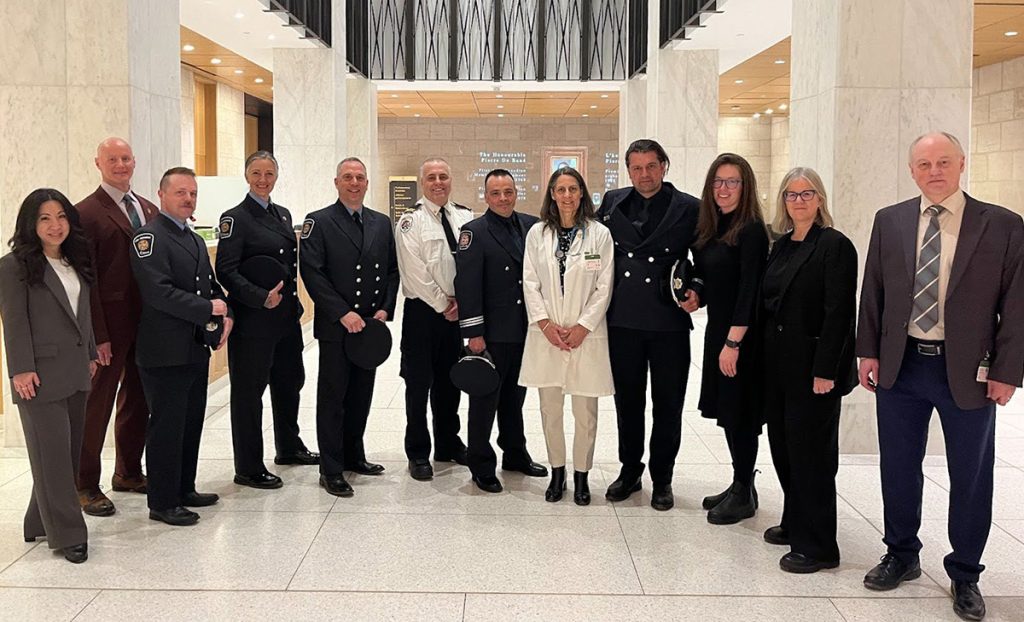
Environmental and health advocates, firefighters, and Northern Indigenous health experts held a press conference on Parliament Hill on Feb. 28, 2024, advocating for action on toxic PFAS “Forever Chemicals.” Dr. Joy Hataley of CAPE Ontario joined the group for the press conference and subsequent meetings with decision makers.
She was there to share the message that exposure to the proliferation of PFAS chemicals in our environments is contributing to ill health and injustice. Further, Dr. Hataley was reinforcing the message that listing the PFAS class as a toxic substance under the Canadian Environmental Protection Act (CEPA) sets the stage for action to prevent ongoing illness and disease, particularly among highly exposed and vulnerable populations.
Dr. Hataley (in the center), CAPE Ontario committee member and physician, stand among environmentalists, health experts, and firefighters at Parliament Hill to lobby against PFAS. (Left to right: Sandra Hamamoto, Neil McMillan, Evan Carter, Genna McMillan, André Delorme, Quincy Emmons, Sébastien Massé, Dr. Joy Hataley, Marc-André Gosselin, Cassie Barker, Dr. Elaine MacDonald, Dr. David Hyndman)
CAPE physicians continued advocating for action on PFAS through the year and in October, Drs. Sharon Dodd and Lyndia Dernis had their commentary “‘Forever chemicals’ demand immediate and decisive action” published in the Vancouver Sun. They asserted that “We are witnessing the early stages of a public health emergency in Canada…” and the “severe, long-term health consequences could affect generations to come.”
The Government of Canada is moving forward with its scientific assessment of PFAS with plans to develop measures to address PFAS chemicals with the recognition that they meet the criterion under CEPA that they “are entering or may enter the environment in a quantity or concentration or under conditions that constitute or may constitute a danger in Canada to human life or health.”
Plastics
2024 was quite a year for plastics advocacy! CAPE joined the chorus of voices calling for governments around the world to create stricter controls on plastics and chemical additives as well as caps on production on plastics.
In April 2024, CAPE board member Dr. Sehjal Bhargava joined other environmental health and justice advocates in a press conference at the fourth session of the Intergovernmental Negotiating Committee (INC-4) to develop an international legally binding instrument on plastic pollution in Ottawa. Dr. Bhargava explained that “Plastic production threatens human health at every stage of life, from cradle to grave. Plastics are a toxic exposure problem…With something as pervasive as plastic, it is up to decision-makers to do the right thing for health and protect people from the consequences of continued exposure to plastic related pollution.”
Later in the year, Dr. Sharon Dodd joined Dr. Bhargava to reinforce the need for action on plastics. Together they made the journey to Busan, South Korea for the fifth negotiating session for a global plastics treaty, INC-5. From November 25-December 1, Drs. Dodd and Bharagava attended sessions with the Canadian government and other negotiators as well as advocates from around the globe. They delivered the CAPE message on the ground in Busan and sent daily updates on the progress of the negotiations.
View this post on Instagram
“As physicians we’re specifically concerned about the chemicals of concern found in plastics, plastic products and additives in plastic…As physicians we’re able to tell stories of real patients that have been facing the illnesses that these chemicals have been tied with.”
Tar Sands Tailings Ponds
In August 2024, the Place Based Power Project worked with partner organization Keepers of the Water to host the Tu’de’gah Water Gathering in Hay River, NWT on the K’atl’odeeche First Nation. Fossil Fuel Extraction Campaign Manager Dakota Norris hosted a sharing circle at the gathering. The sharing circle highlighted the urgent need for stronger Indigenous-led solutions to address water and related human health issues caused by industrial activities and environmental injustice. As Dakota reported in his November blog post “Water, which is sacred to Indigenous peoples, is central to human and planetary health. Extractive industries like the tar sands degrade water systems and their quality, impacting everything from the local ability to have clean water or practice traditional lifestyles, to contaminating North America’s second largest watershed with little oversight or recourse.”
Dakota later appeared as a witness at the invitation of the Senate Standing Committee on Energy, Environment and Natural Resources to provide testimony for consideration in their study of “Climate Change: Canadian Oil and Gas Industry.” Along with sharing the knowledge of the health, environmental and justice impacts of industry activities, Dakota asserted the importance of governments paying heed to the expertise of the people and communities whose experiences illustrate the effects of oil and gas extraction on their lives.
“If you go to almost any community with an industry project, you will hear stories of people who lost jobs, of the disrupted social atmosphere, of the health impacts such as respiratory issues due to emissions, increased cancer rates due to being downstream of the tar sands industry, et cetera.”
Dakota reinforced that “these stories are available. We just need to listen to them…we can do that using tools like Canada’s environmental justice strategy, really uncovering the truths and stories of the health and environmental and social impacts of these industries within communities.”
Environmental Justice
2024 marked the historic passage of Bill C-226, the National Strategy Respecting Environmental Racism and Environmental Justice Act into law. This landmark legislation marks a significant victory for environmental justice in Canada, a cause that CAPE has passionately advocated for over the years. The Act mandates the federal government develop and regularly report on a strategy to prevent environmental racism and advance environmental justice.
CAPE board member Dr. Ojistoh Horn was among the many powerful voices who appeared as advocates in support of the bill during its journey through parliament. In her testimony before the Senate Standing Committee on Energy, Environment and Natural Resources she recommended “swift implementation of the strategy, stressing the recognition that environmental justice, human health and ecological biodiversity are intertwined and all are impacted by environmental racism.”
Dr. Horn provided examples of environmental racism including in her own community and offered a compelling description of the concept: “Environmental racism is the inequitable distribution of accountability. It is supported by upstream systemic factors—societal values and beliefs conforming to a capitalist economy—that humans do not have a right to a healthy environment in practice, legislation that does not fairly protect BIPOC and Indigenous communities, institutions whose siloed and competing mandates do not protect these communities and are not uniformly held accountable to the laws already in place and programs that have been designed without input from all stakeholders.”
Dr. Horn also responded to a question with insights about the connections between health and the environment: “When we talk about traditional medicine, what we’re talking about is really engaging in, improving and supporting those relationships that originally made us healthy—like our relationships with the water and the land and the acknowledgement that we’re not just here. We have responsibilities. We’re not just here for the taking. We are responsible for stewarding the land. This is not our land. This land belongs to those faces that are coming, the ones that are not here yet—the yet unborn.”
Moving Forward Together
With so many CAPE physicians and allied professionals articulating problems and solutions that reflect a narrative rooted in principles of justice, heath, collective care, intergenerational equity and ecological connectedness, it is hard to imagine we wouldn’t continue to make a difference to the environmental advocacy landscape even as wider political and social forces put up barriers. In 2025 I invite you all, as Dr. Kimmerer does in the quote above, to continue to use and invest your gifts on the side of creation—the creation of a healthy and just future.
With that in mind, you might have seen our wishlist for the toxics program, shared near the end of the 2024 fundraising campaign. We wished for:
- Increased outreach and communications tools on preventing toxic exposures campaigns (e.g. creating social media assets, blog posts)
- Development of knowledge translation tools for physician advocates on key toxics issues (e.g. fact sheets, key messages and briefs)
- Mobilization of physicians with community partners to amplify environmental justice messages (e.g. travel and meeting costs for collaborations)
Those wishes reflect areas where we will be placing dedicated energy in 2025 in support of our toxics prevention advocacy.
Join us as we work hard to mobilize the message that decision-makers and industry must make pollution prevention, the protection of human health from harmful exposures, and upholding human rights through strong environmental action a priority in this election year and beyond, including government action to:
- Implement and strengthen the Canadian Environmental Protection Act (CEPA)
- Establish a permanent, high-level office of environmental justice
- Reduce harms from pesticides
- Enforce polluter pays measures to hold companies responsible for the costs of the environmental and health harms