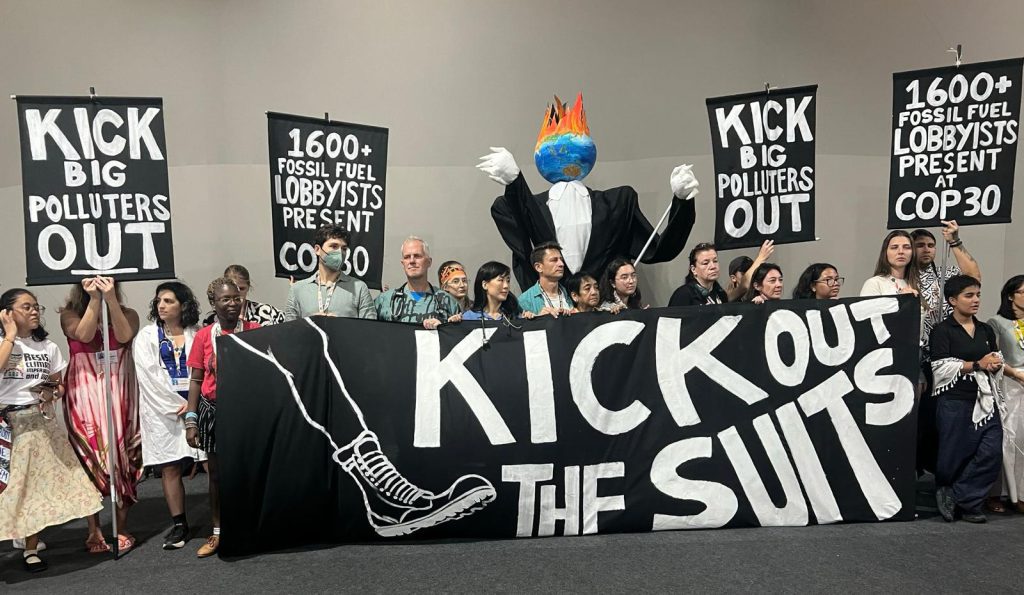
Between November 12 and 20, CAPE’s physicians and allies showed exactly what it looks like when health experts take the climate stage with clarity, courage, and evidence. From packed panels to pointed media moments, our delegation made one thing unmistakably clear: the climate crisis is a health crisis, and health professionals are witnessing its impacts every single day. And they started by making sure to remind the few hundred fossil-fuel industry lobbyists that they were in the wrong place, calling on the UNFCCC to ‘kick out the suits’!
Millions of lives at stake
Nola Poirier drove the message home with powerful numbers: more than seven million people die each year from air pollution, and “the lungs of the planet” are literally in policymakers’ hands. Don’t miss our photo-lung wrap-up video, complete with a little surprise!
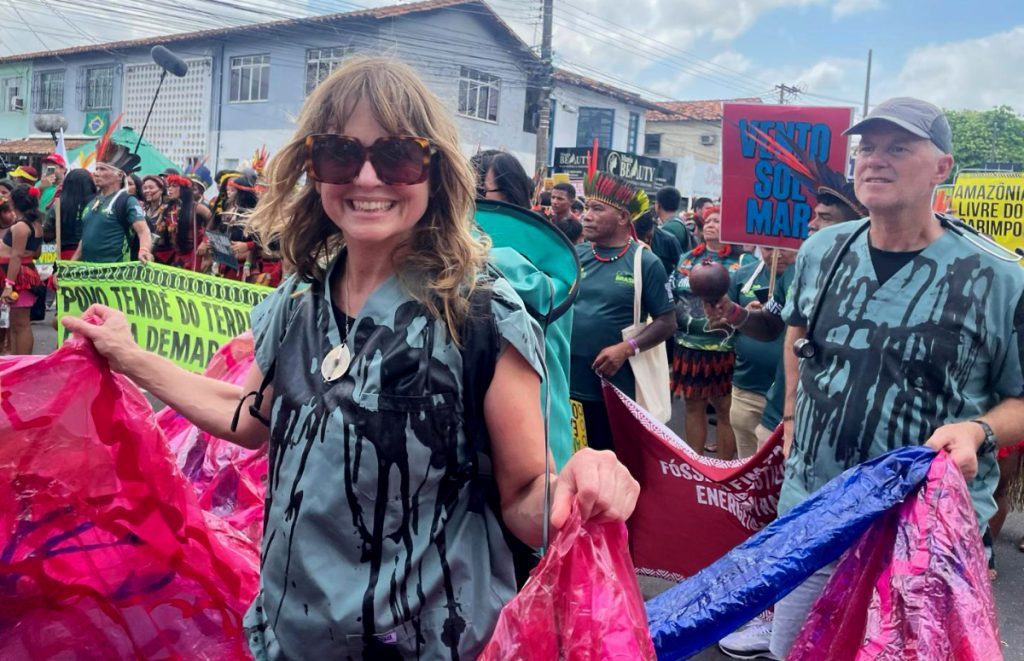
Dr. Samantha Green reminded government and industry leaders that climate change isn’t abstract: she sees its impacts in her clinic every single day.
Three Panels, One Goal: Protect Health Through Nature
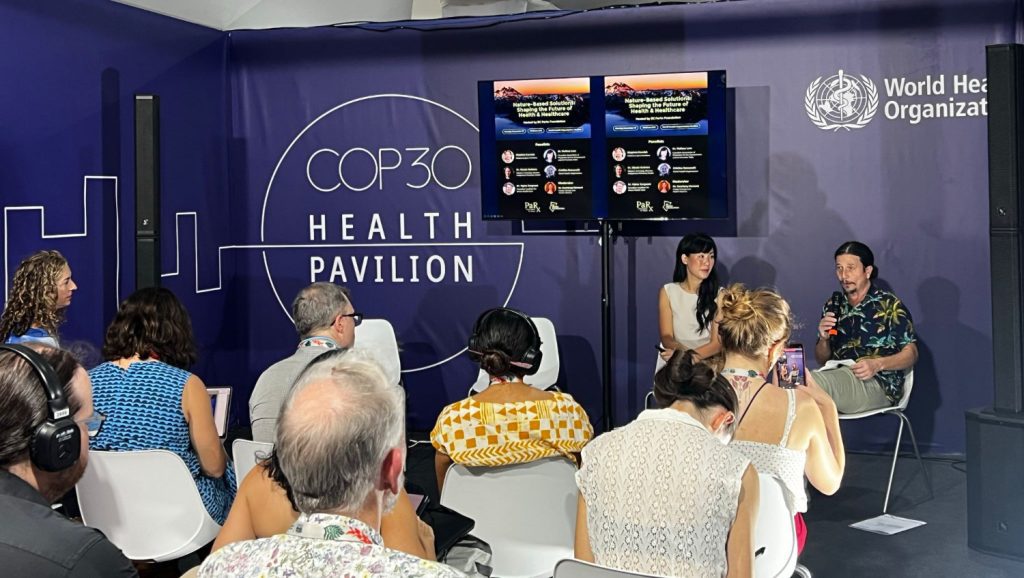
Dr. Mili Roy, Dr. Courtney Howard, and Dr. Melissa Lem joined two nature-based solutions panels in one day, appearing alongside climate and health experts from the WHO, ParX, and the BC Parks Foundation. Meanwhile, the rest of the CAPE delegation kept the energy high with a standout photo-op action.
Fossil Fuels Harm Health at Every Stage
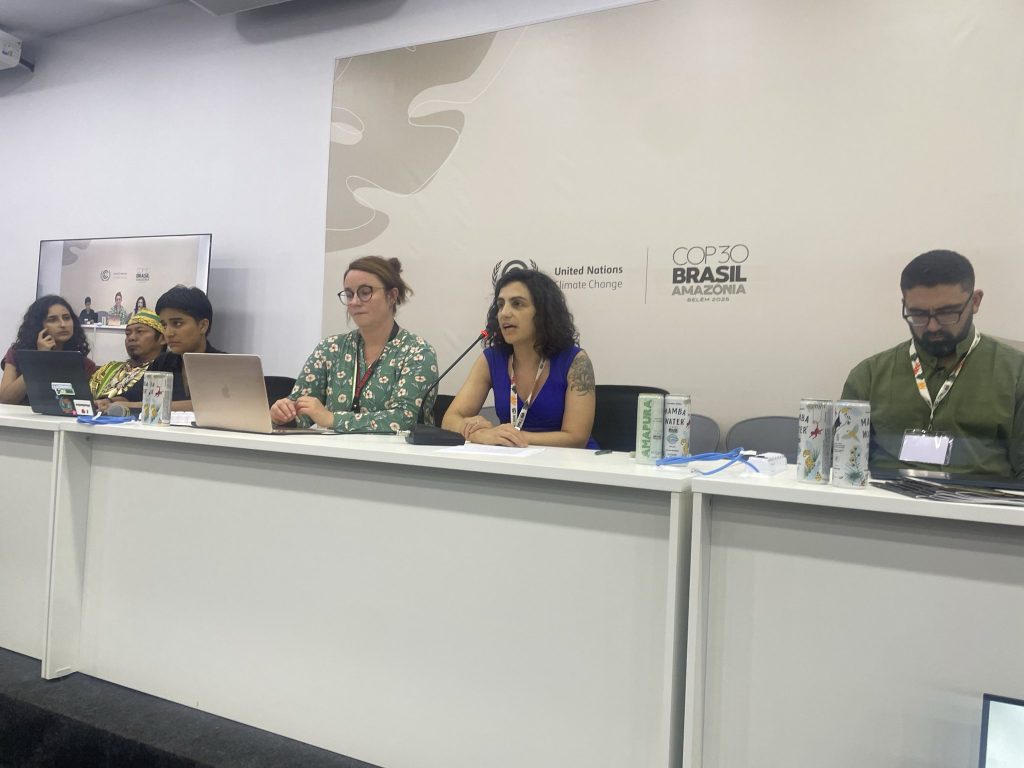
That same day, Dr. Samantha Green—then President Elect and now officially CAPE President as of November 22—brought forward our perspective in a joint Can-Rac mid-point press release.
“Fossil fuels harm the health of Canadians at every stage of the life cycle and at every part of industry: from extraction to transportation to use to disposal. We see the harms of fossil-fuel driven climate change in our communities with an increase in heat-related illness, wildfire smoke-induced respiratory disease, and Lyme disease. And we see the harms of LNG extraction with an increase in pediatric cancers and other rare diseases in communities across northern BC. (…)”
When Health Systems Say ‘Enough’
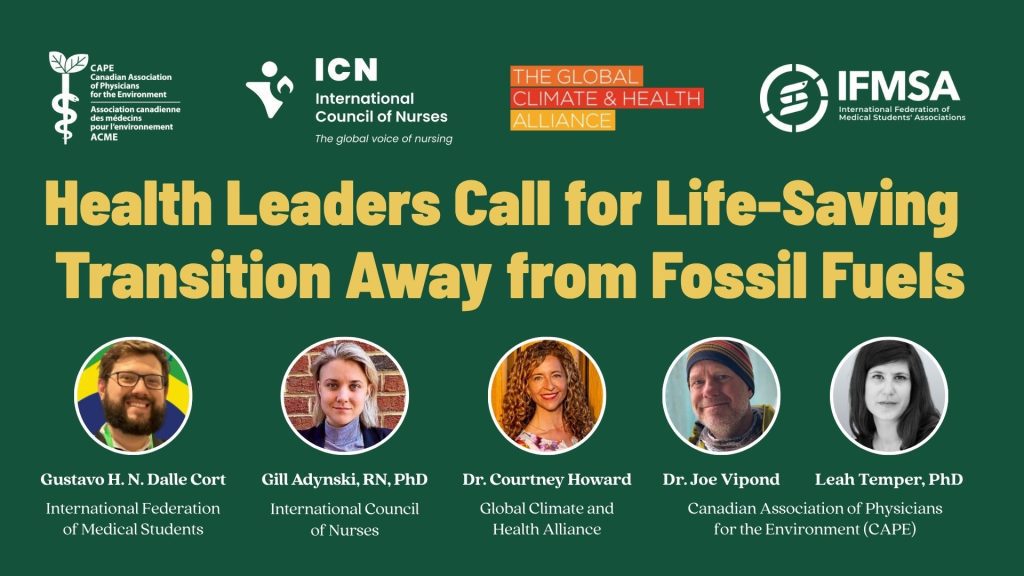
Dr. Courtney Howard, Dr. Joe Vipond, Leah Temper (PhD), Gillian Adynski (Certified Global Nurse Consultant and Nursing & Health Policy Analyst, ICN), and Gustavo Cort (IFMSA) all reminded policymakers that if fossil fuel expansion continues, our health systems will be pushed past their limits. The health impacts will stretch far beyond direct illness: they will also show up as burned-out nurses, strained frontline workers, and destabilized care across entire communities. Watch the livestream here.
Stop Playing on Words
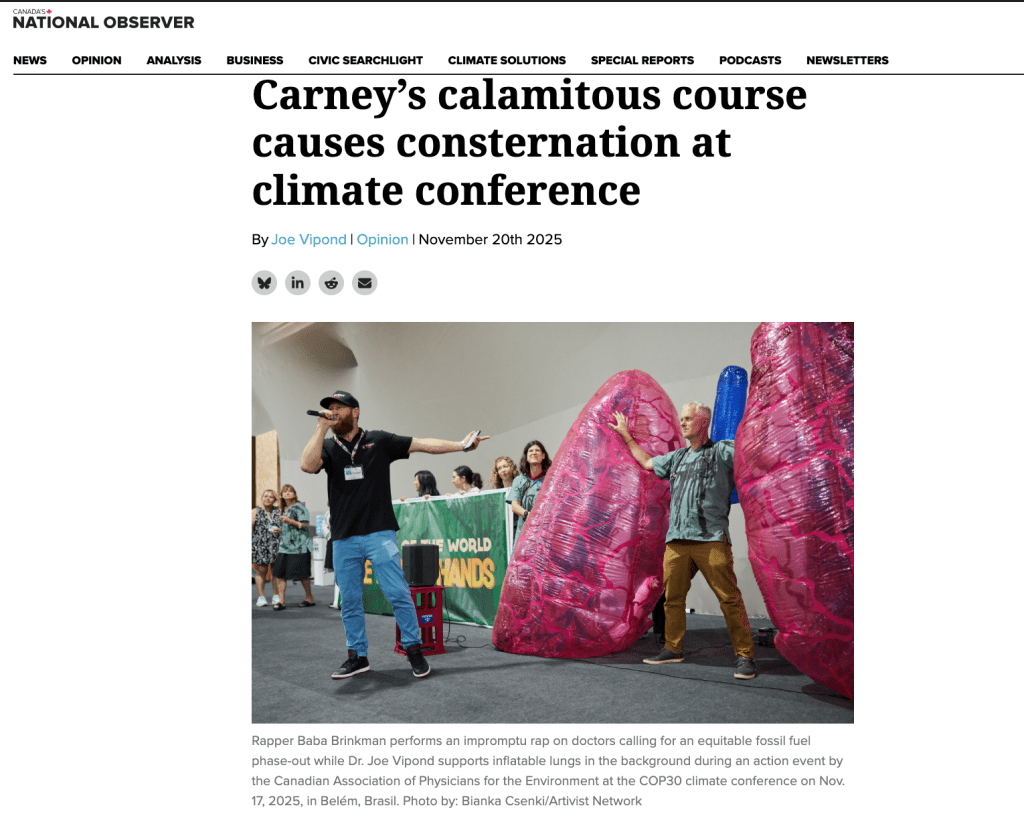
Dr. Joe Vipond didn’t hold back telling Prime minister Carney to stop playing on words and stop putting people’s health at risk in a timely opinion piece published in The National Observer. A standout moment that captured the urgency and honesty our delegation brought to every space.
Post-COP30: Debriefing, Downloading, Doing the Work
And last but not least: right after COP30, and fresh off our AGM, Dr. Joe Vipond, Dr. Melissa Lem, and our Executive Director, Sabrina Bowman, sat down with folks to share learnings, insights, and what comes next. Video coming up soon!
And now, more than ever, with Canada rolling back environmental policies under the guise of “energy security”, it becomes critical to re-expect, reinforce, and implement the Belém Health Action Plan. The stakes are too high to ignore. To protect people’s health from the escalating consequences of climate change and severe extreme weather, we must act in the face of this triple crisis.
Read more about CAPE’s COP30 activities.